
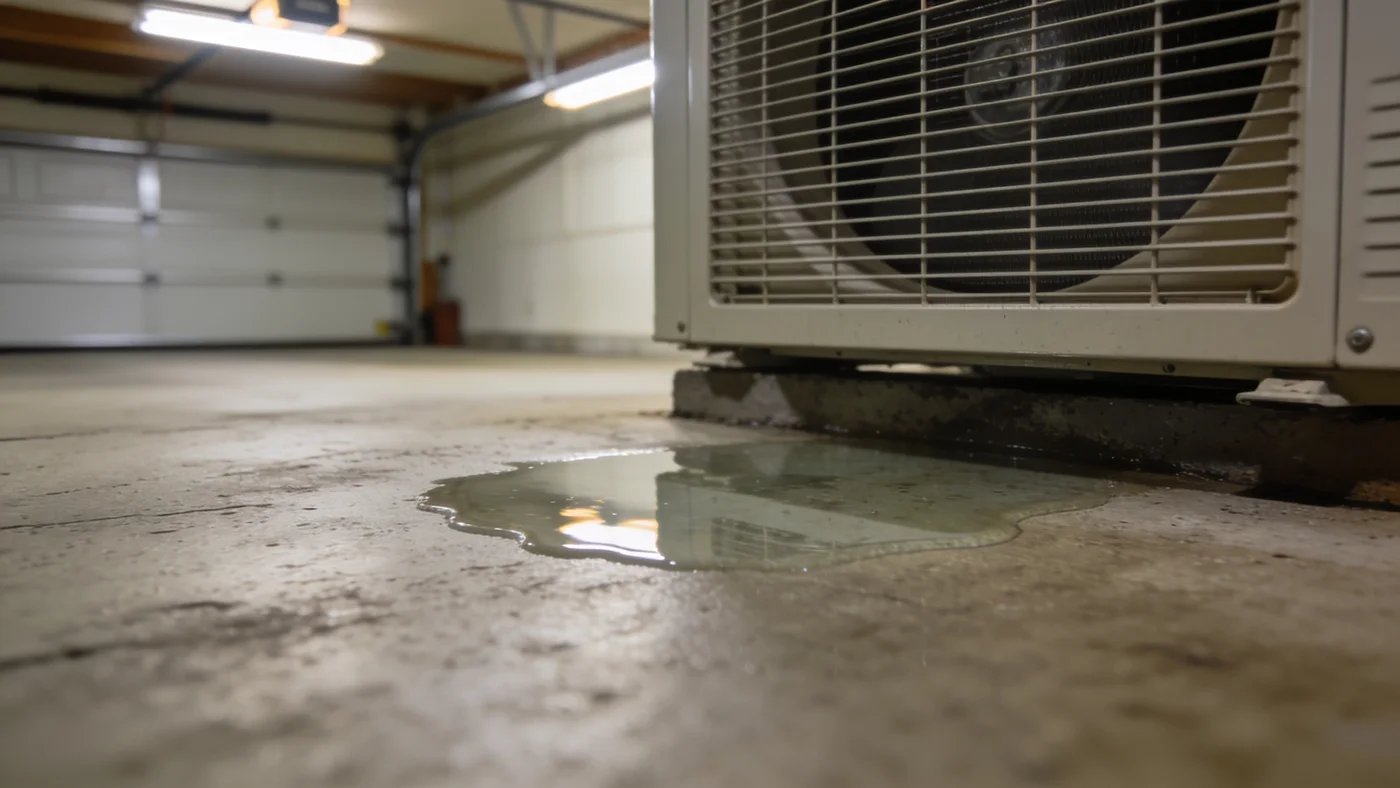
You go to the garage or the hall closet and there it is: a puddle under the indoor unit. Water and machinery are never a combination you want to discover, but take a breath — an AC water leak is usually a small problem announcing itself early. The key is what you do in the next hour.
Why an air conditioner makes water at all
Cooling your air also dries it. All that moisture condenses on the indoor coil — on a humid day, gallons of it — drips into a pan, and drains out of the house through a small pipe. Water on the floor means that path failed somewhere.
The causes, most common first
1. A clogged condensate drain line
The champion, by a mile. Algae and gunk build up in the drain pipe until water backs up and overflows the pan. Sacramento’s long cooling season gives that buildup months to accumulate — which is why we flush the drain on every AC tune-up.
2. A frozen coil that’s now thawing
If the coil iced up (dirty filter, low refrigerant) and then melted, all that ice becomes water at once and overwhelms the pan. If you’ve had weak cooling lately, this is a likely story — see our post on why ACs freeze up on hot days.
3. A cracked or rusted drain pan
Pans age, especially under systems 12+ years old. Water leaks through instead of draining away.
4. A failed condensate pump
Some installations pump the water uphill. When that little pump dies, the water stays — on your floor.
Do this right now
- Turn the system off at the thermostat. No new water while you sort it out, and if the coil is frozen this starts the safe thaw.
- Sop up the puddle. Water damage and mold move fast on drywall and wood. Towels now save repairs later.
- Check the filter. If it’s filthy, the frozen-coil theory just got stronger. Replace it.
- Look at the drain line outside (a small PVC pipe, usually near the outdoor unit). No dripping on a humid day while the system runs = a clog is likely.
- If you’re comfortable, vacuum the drain line’s outdoor end with a wet/dry vac for a minute — that clears many clogs. If not, that’s exactly what we’re for.
When to call
Call promptly if the water returns after you’ve cleared the line, if the pan is damaged, if a pump has failed, or if the leak came with ice on the lines. All are fast fixes for a certified technician and slow-motion damage if left alone. Book AC repair in Sacramento or call (916) 927-4500 — same-day service across the metro when scheduling allows, from Elk Grove to Roseville.
And if you’d rather never mop up after your AC: drain flushing is a standard item on every ProCare visit. The ProCare plan is $19.50/month and includes both seasonal tune-ups, prepaid and scheduled for you.