
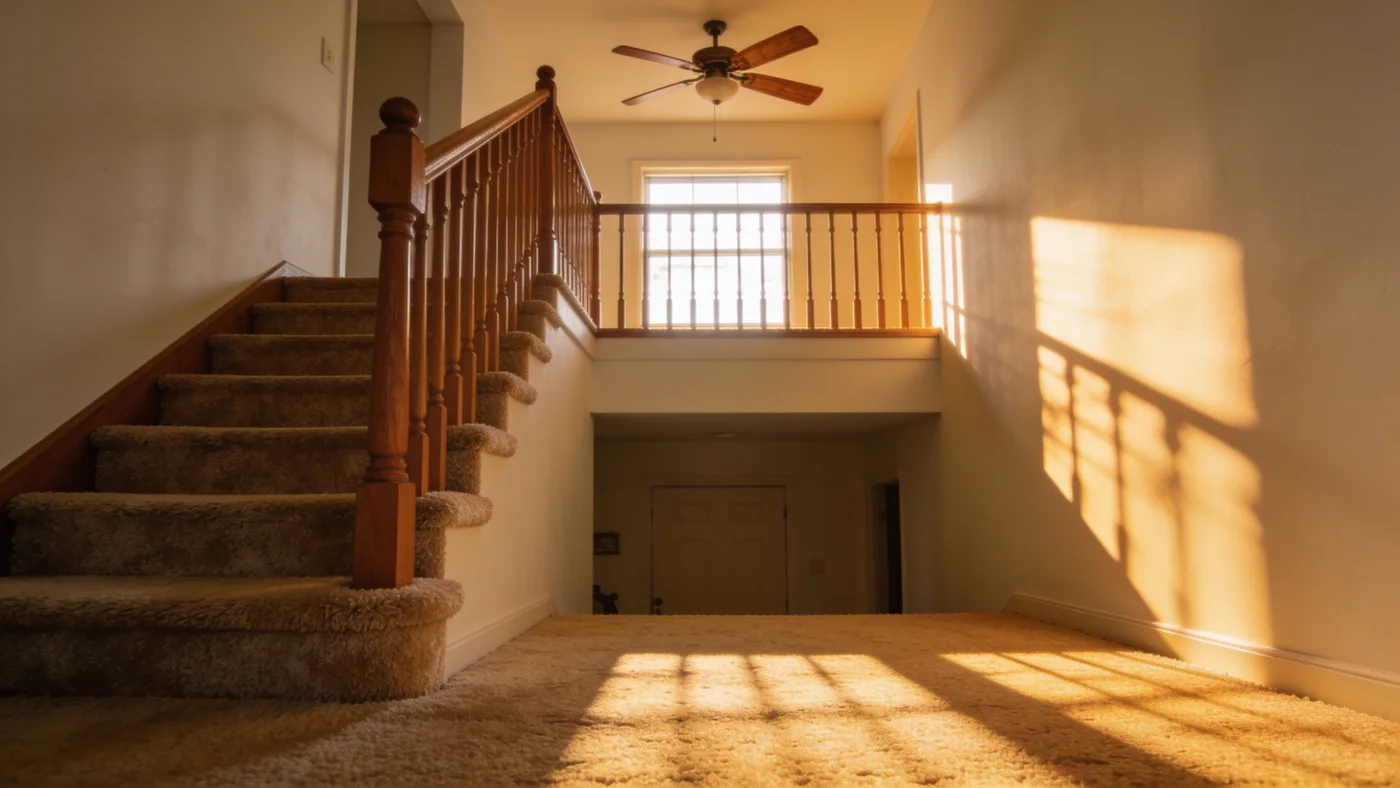
Walk up the stairs in a Sacramento two-story home on a July afternoon and you can feel the temperature climb with every step. If your second floor runs 5 to 10 degrees warmer than the first, you are in good company — and there are real fixes.
Here is why it happens, and what actually works, starting with the simplest.
Why the second floor runs warm
- Heat rises. Warm air collects at the top of the house all day long.
- The roof bakes. Your upstairs ceiling sits under an attic that can hit 130°F+ on a hot day.
- The thermostat lives downstairs. It shuts the system off when the first floor is comfortable — while the second floor is still warm.
- Long duct runs. Upstairs rooms are often at the end of the duct system, where airflow is weakest.
Fix 1: Balance the vents
Partially close a few supply registers downstairs and make sure every upstairs register is fully open. This nudges more cooled air to the second floor. It is not a cure, but it is a 10-minute improvement that costs nothing but your time.
Fix 2: Run the fan to mix the air
Setting the thermostat fan to ON keeps air circulating between floors even when the AC is not actively cooling. Ceiling fans upstairs, spinning counterclockwise, help the cooled air reach the people in the room.
Fix 3: Deal with the attic
A blazing attic radiates heat through the ceiling into every upstairs room all evening. Healthy attic insulation and working ventilation take the edge off in a way you can feel. If your home was built before the mid-2000s and the insulation has never been topped up, this is worth a look.
Fix 4: Have the ductwork checked
Leaky or crushed ducts in the attic lose cooled air before it ever reaches the upstairs bedrooms. A duct inspection tells you whether the air leaving your AC is actually arriving where it should. This is one of the most common findings in Sacramento two-story homes.
Fix 5: Ask about zoning
A zoned system gives each floor its own thermostat and damper control, so the second floor gets cooling on its own schedule. For homes where the upstairs gap is severe, zoning solves the problem at the source. Our team can tell you honestly whether your system and ductwork are good candidates — some are, some are not.
Start here this weekend
- Open every upstairs register fully
- Partially close 2–3 downstairs registers
- Thermostat fan: ON during hot afternoons
- Ceiling fans counterclockwise upstairs
- Book a duct and airflow check if the gap stays above 6°
When to bring us in
If the simple fixes have not closed the gap, the next step is a proper airflow diagnosis — measuring what each room actually receives. Our certified technicians do this as part of an AC service visit, and regular tune-ups keep the system delivering its full airflow.
Warm upstairs driving everyone to the living room? Call Deal Mechanical at (916) 927-4500 or schedule online. Straight answers since 1959.