
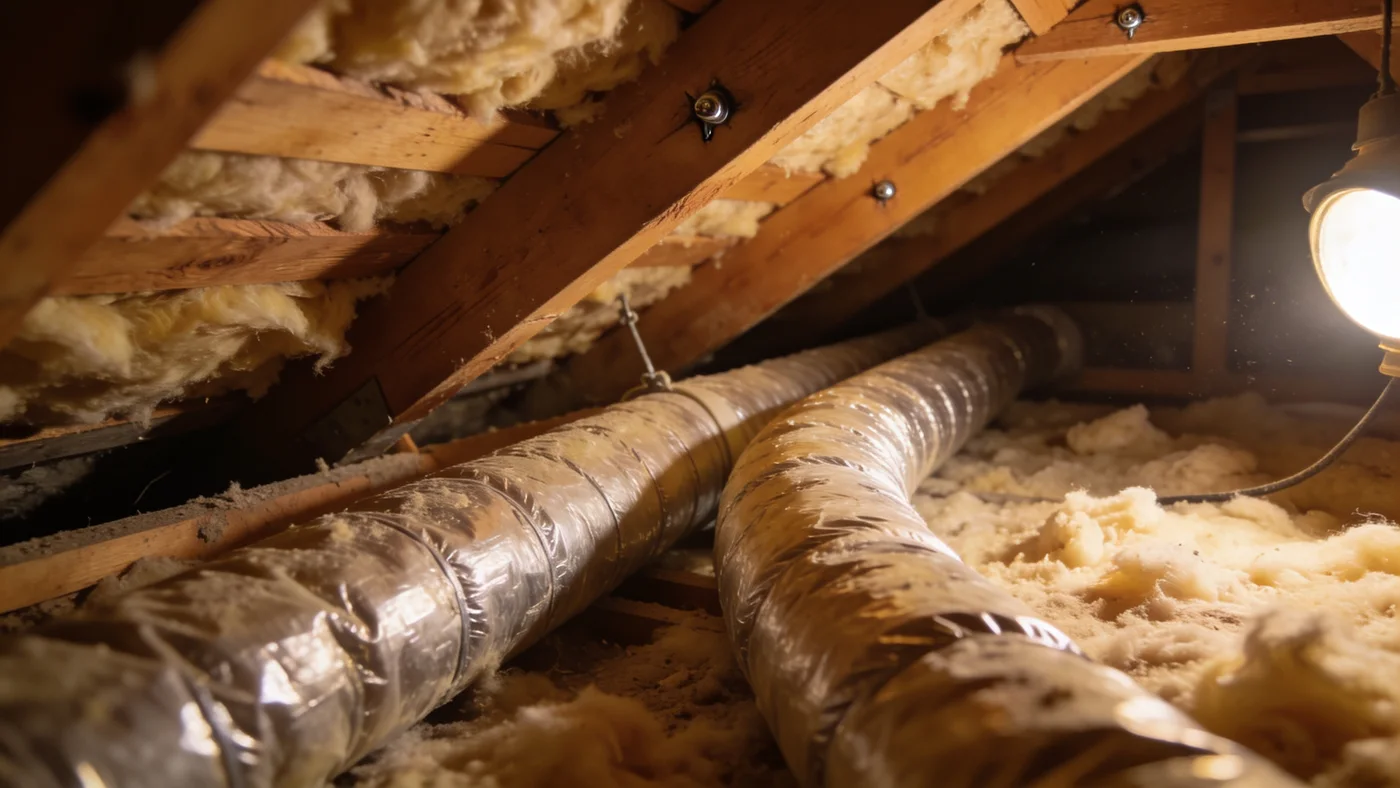
Here is a number that surprises most homeowners: in a typical older home, a noticeable share of the air your AC cools never reaches a room. It leaks out of the ductwork along the way — usually into the attic, where it cools the rafters instead of your family.
If you have a bedroom that stays warm while the hallway feels fine, this is one of the first places to look.
How ducts spring leaks
- Joints work loose. Decades of the system pressurizing and relaxing loosens connections and tape.
- Old duct tape fails. Ironically, standard duct tape dries out and falls off ducts. Sealing calls for mastic or foil-backed tape.
- Flex duct gets crushed or torn. Anything stored in the attic can pinch a run flat; pests and time do the rest.
- Boots pull away from ceilings. The connection behind each register can separate, dumping air into the ceiling cavity.
The signs, from your side of the ceiling
Clues that point to duct leakage
- One or two rooms noticeably warmer, always the same ones
- Weak airflow at certain registers
- The system runs longer every year without a change in weather
- More dust than usual settling around the house
- An attic that smells like conditioned air on a hot day
What a duct inspection and sealing looks like
A certified technician inspects the accessible runs, measures airflow at each register, and identifies where air is escaping. Sealing is straightforward work: mastic and proper tape at joints, re-securing boots, replacing damaged flex sections, and re-strapping runs so they hang without kinks.
The result you feel: rooms that finally match the thermostat, and a system that stops working overtime to push air through a leaky network.
Why this matters more in Sacramento
Most of our valley’s ductwork lives in attics that hit 120–140°F on summer afternoons. Every leak means cooled air lost into the hottest space in the house — and hot attic air pulled back in on the return side. Sealed, insulated ducts are one of the highest-value improvements an older Sacramento home can make.
Duct condition is part of what we evaluate during an AC tune-up, and airflow problems are a routine part of our repair visits. If a room in your home has never cooled properly, call (916) 927-4500 or schedule online — we will find where the air is actually going.