
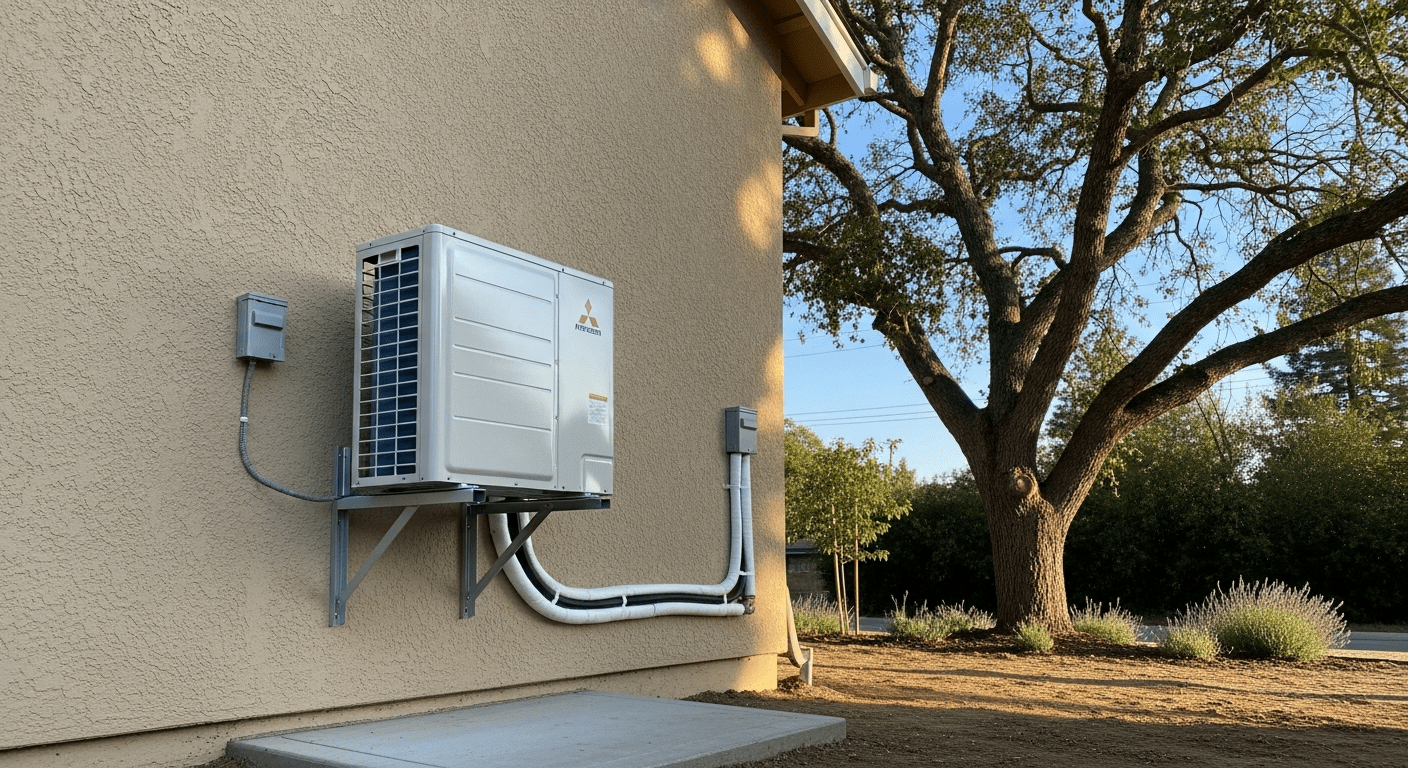
Sacramento has become one of California’s friendliest regions for ADUs — backyard cottages, garage conversions, and above-garage suites are going up across the county. And in nearly every ADU project we visit, the same thing is true: the comfort decisions made before the walls close determine whether the finished space is a pleasure or a headache.
Here are the five decisions worth settling early — whether the ADU is for family, for rent, or for resale value.
1. Its own system, or an extension of the house?
The single biggest decision. Extending the main house’s ductwork into an ADU sounds economical and almost never is: the existing system was sized for the house it serves, long duct runs bleed heat, and the ADU ends up living on the main house’s thermostat. An independent system gives the ADU its own control, its own performance, and — if you ever rent it — a clean answer to who controls the comfort. Our ADU HVAC systems page walks through the options in detail.
2. Why the mini-split is the ADU default
For most Sacramento ADUs, a ductless mini-split is the answer that keeps winning: it heats and cools from the same unit, it needs no ductwork (which matters enormously in a 400–800 sq ft envelope), it runs quietly enough for studio living, and it meters honestly on the ADU’s own usage. One properly sized unit often carries a studio; a one-bedroom typically takes a head in the living space and one in the bedroom. Our mini split installation team sizes to the actual envelope — insulation, glazing, orientation — not a square-footage rule of thumb.
3. Placement, while placement is still cheap
Before drywall, everything is flexible. The indoor head wants a wall with room for airflow, away from the bed’s direct line. The outdoor unit needs to respect setbacks, sit somewhere serviceable, and stay out of the neighbor’s bedroom window’s earshot — a quiet consideration that keeps everyone friendly. Line-set routing decided on the framing walk costs nothing; the same decision after stucco is a change order.
4. The electrical panel conversation
ADUs add load — HVAC, kitchen, laundry. Whether the main panel carries it, the ADU gets a subpanel, or the project triggers a service upgrade is a conversation to have during planning, because it affects the HVAC equipment choices and the budget. It is a five-minute check early, and a project-stalling surprise late.
5. Fresh air and filtration in a small envelope
Small, tight, well-insulated spaces concentrate everything — cooking, humidity, and on Sacramento’s smoke days, whatever gets inside. Plan the ventilation path, and give filtration a thought beyond the minimum: in a space this size, one good filter position covers everything. On smoke-season strategy, our wildfire smoke and indoor air quality guide applies doubly to ADUs.
- Independent system chosen and sized to the actual envelope
- Indoor head and outdoor unit positions marked
- Line-set and condensate routing agreed
- Panel capacity confirmed — subpanel or upgrade decided
- Ventilation path planned
If you are earlier in the process — still weighing what an ADU needs — start with our overview of ADU heating and cooling options in Sacramento, and the winter-performance details in the winter side of mini-splits. And once the system is in, an annual visit keeps it earning its keep — see mini split maintenance for what that covers.
Straight answers, certified technicians, and the price before the work — every time. ProCare members are taken care of first when schedules fill up.